
The Art of Statistics: How to Learn from Data
by David Spiegelhalter
- Publisher
- Basic Books
- Year
- 2021
- Pages
- 448
About this book
In this "important and comprehensive" guide to statistical thinking (New Yorker), discover how data literacy is changing the world and gives you a better understanding of life’s biggest problems.
Statistics are everywhere, as integral to science as they are to business, and in the popular media hundreds of times a day. In this age of big data, a basic grasp of statistical literacy is more important than ever if we want to separate the fact from the fiction, the ostentatious embellishments from the raw evidence -- and even more so if we hope to participate in the future, rather than being simple bystanders.
In The Art of Statistics, world-renowned statistician David Spiegelhalter shows readers how to derive knowledge from raw data by focusing on the concepts and connections behind the math. Drawing on real world examples to introduce complex issues, he shows us how statistics can help us determine the luckiest passenger on the Titanic, whether a notorious serial killer could have been caught earlier, and if screening for ovarian cancer is beneficial. The Art of Statistics not only shows us how mathematicians have used statistical science to solve these problems -- it teaches us how we too can think like statisticians. We learn how to clarify our questions, assumptions, and expectations when approaching a problem, and -- perhaps even more importantly -- we learn how to responsibly interpret the answers we receive.
Combining the incomparable insight of an expert with the playful enthusiasm of an aficionado, The Art of Statistics is the definitive guide to stats that every modern person needs.
You'll be redirected to Amazon to complete your purchase.
You might also like

Fluent Python: Clear, Concise, and Effective Programming
Luciano Ramalho
Don't waste time bending Python to fit patterns you've learned in other languages. Python's simplicity lets you become productive quickly, but often this means you aren't using everything the language has to offer. With the updated edition of this hands-on guide, you'll learn how to write effective, modern Python 3 code by leveraging its best ideas.
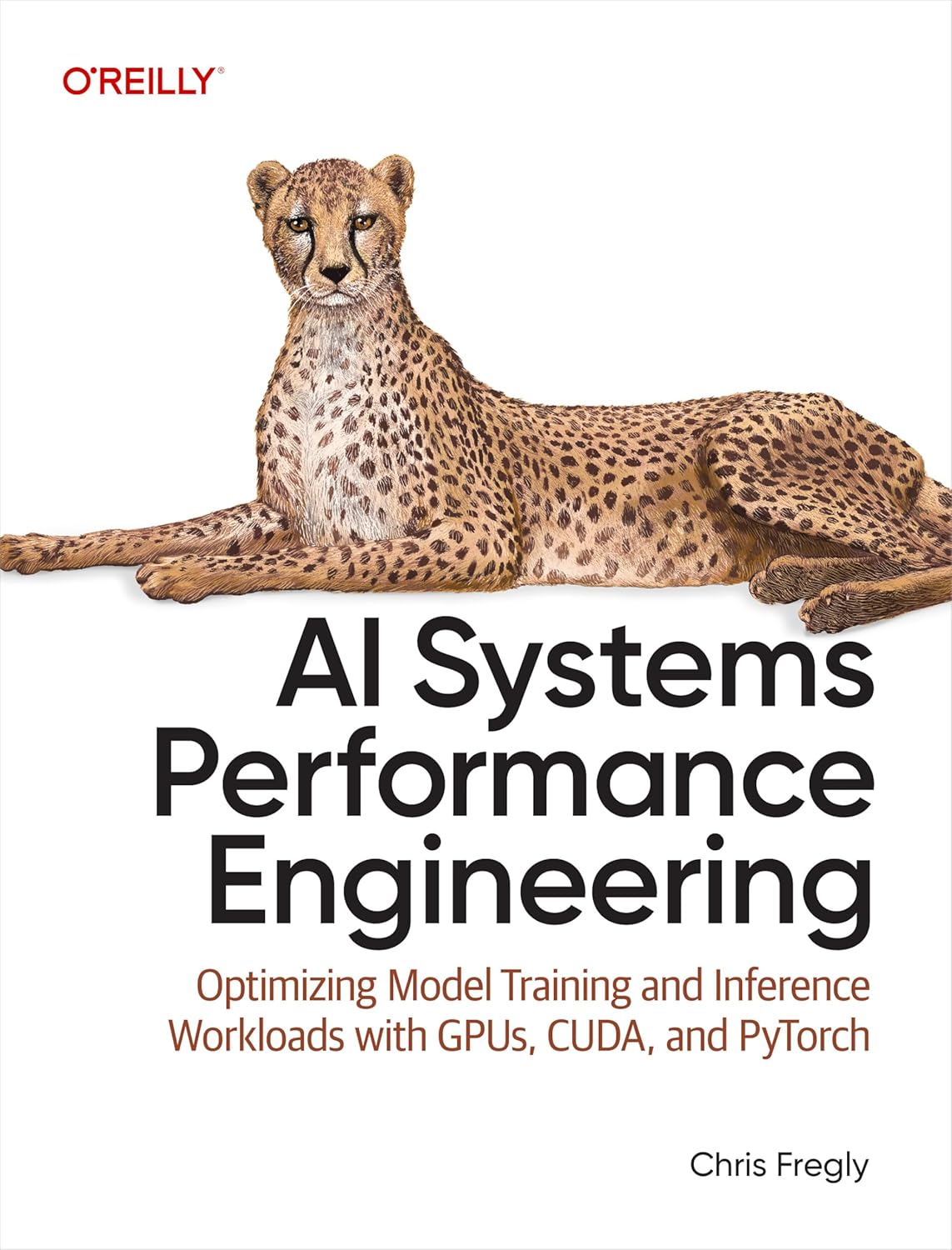
AI Systems Performance Engineering: Optimizing Model Training and Inference Workloads with Gpus, Cuda, and Pytorch
Chris Fregly
Elevate your AI system performance capabilities with this definitive guide to maximizing efficiency across every layer of your AI infrastructure. In today's era of ever-growing generative models, AI Systems Performance Engineering provides engineers, researchers, and developers with a hands-on set of actionable optimization strategies. Learn to co-optimize hardware, software, and algorithms to build resilient, scalable, and cost-effective AI systems that excel in both training and inference. Authored by Chris Fregly, a performance-focused engineering and product leader, this resource transforms complex AI systems into streamlined, high-impact AI solutions.
View details →
Hands-On Machine Learning with Scikit-Learn and PyTorch: Concepts, Tools, and Techniques to Build Intelligent Systems
Aurélien Géron
The potential of machine learning today is extraordinary, yet many aspiring developers and tech professionals find themselves daunted by its complexity. Whether you're looking to enhance your skill set and apply machine learning to real-world projects or are simply curious about how AI systems function, this book is your jumping-off place.